The Evolution of Mass Behaving: Edition 2 Now available!
A Smarter, Sharper Tool for Understanding Why People Choose Brands
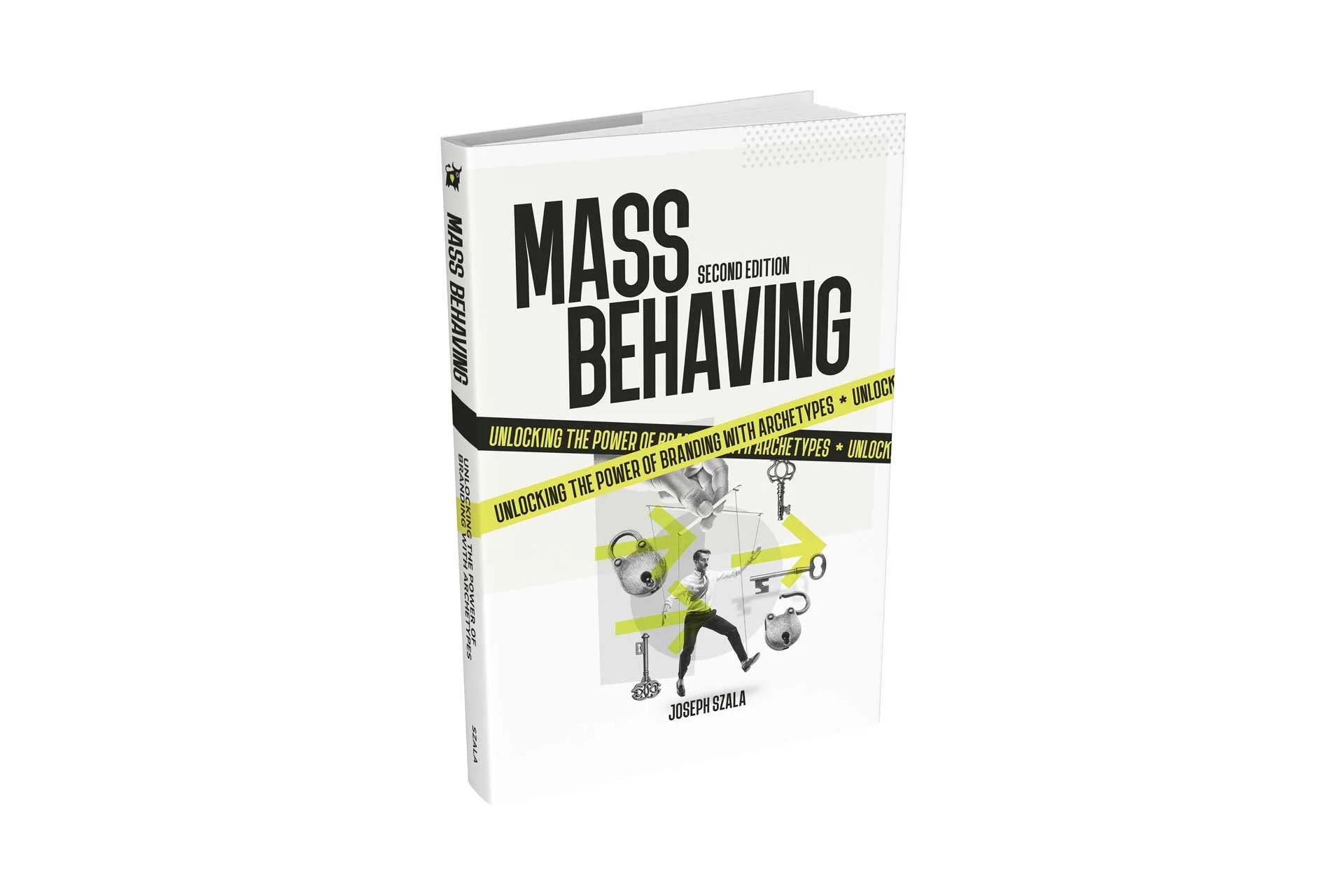
Mass Behaving has always been a book about human behavior. Not demographics. Not vibes. Not trends dressed up as insights. It is a framework for understanding the deep psychological forces that move people toward or away from brands. Over the past few months, the book has gone through its most significant transformation yet. Here is what changed and why it matters.
The original manuscript focused heavily on describing archetypes. Solid ground, but too close to a field guide. The updated version shifts the emphasis to behavior first. Instead of treating archetypes as personalities floating above reality, the book positions them as predictable motivational engines. Each archetype becomes a map of why people act the way they do, not simply how they appear on the surface. This shift turns the framework from descriptive to actionable.
The next major change was the removal of rigid archetype selection. Most brand frameworks still force leaders to choose a single archetype and declare it the brand’s identity. That structure creates more problems than clarity. It oversimplifies Patron behavior and it encourages agencies to contort brands into boxes that never fit. The new edition introduces a layered model that sits inside the Golden Lasso framework. Patron, Profile, Projection. Archetypes now influence all three instead of defining only one. Leaders can track motivations across segments, align positioning more naturally, and shape brand behavior with far more nuance.
Another key upgrade is the addition of the Quadrant System. Rather than starting with all twelve archetypes, the book narrows the pattern early by separating them into four motivational quadrants. Each quadrant captures the gravitational pull behind the decisions people make. This structures the discovery process around motivation instead of creative preference. It allows teams to identify audience drivers faster and with more confidence. Once the quadrant is clear, the model zeroes in on the three archetypes that live inside that space. This tiered method reduces guesswork and accelerates clarity.
We also expanded the practical side of the book. The early draft offered strong theory but lighter instruction. The updated version includes new worksheets, updated exercises, and more modern examples pulled from restaurant, retail, and digital experience brands. It also addresses the rise of false signals in data. Leaders today drown in dashboards while missing the psychological forces that matter. Mass Behaving helps fix that imbalance. The latest edition explains how to use archetypes ethically, how to separate bias from truth, and how to design brand behavior that resonates with real motives and not surface level assumptions.
Finally, the book’s tone evolved. The earlier draft leaned academic at times. The new version reflects the clarity of The Bullhearted Brand: direct language, real-world context, and zero fluff. Brands do not need theory that lives in a vacuum. They need theory that converts into decisions. This rewrite makes the framework more applicable for teams shaping multi-unit brands, building new concepts, or refreshing old ones.
In short, Mass Behaving grew up. It is now a more precise, more powerful system for decoding why people behave the way they do and how brands can meet them with intent. It sharpens the thinking. It tightens the model. It gives leaders a clearer path to building brands that act with purpose instead of copying whatever is trending.