Stop Shoving Your Brand In People’s Mouths
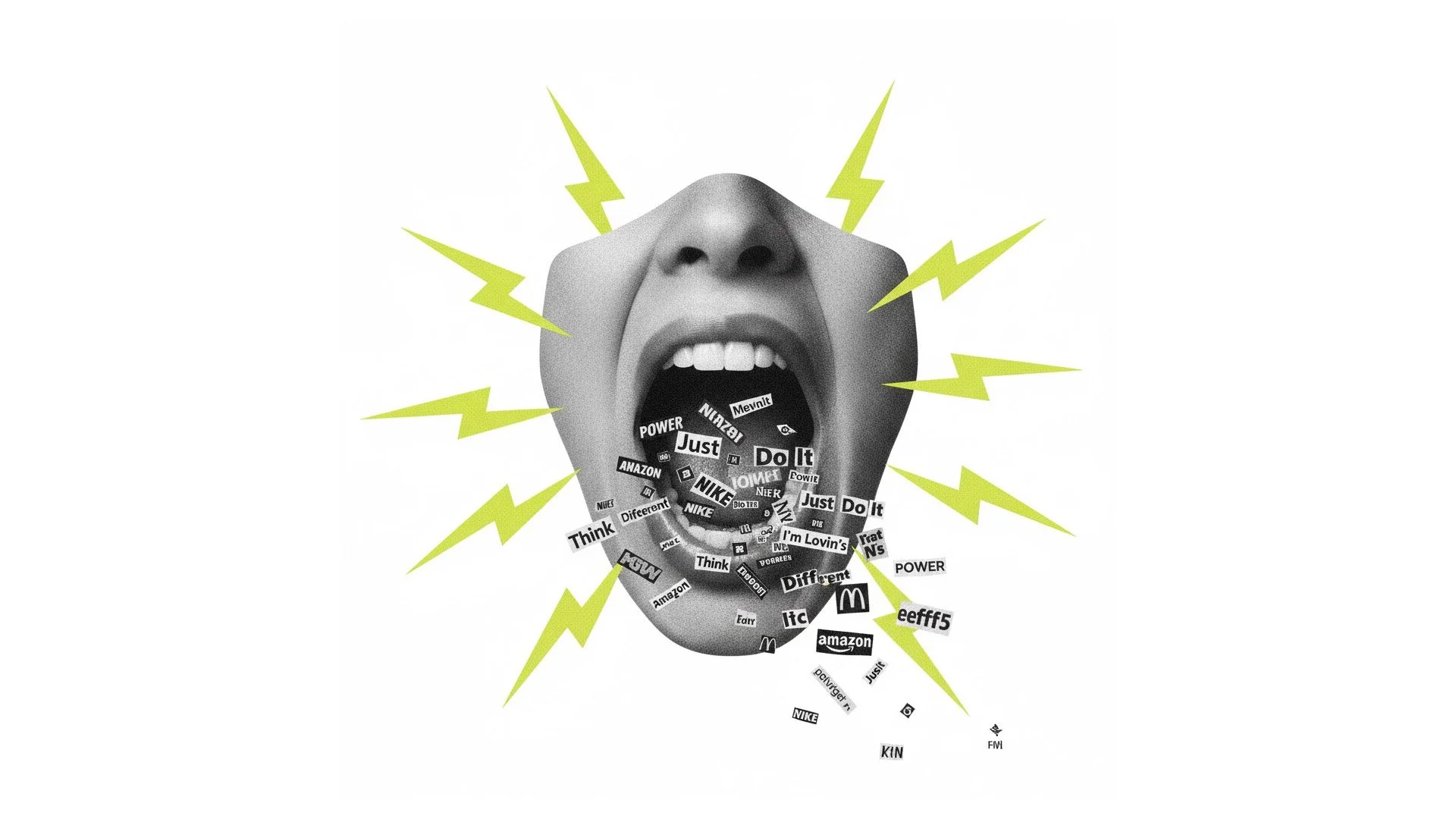
Nothing derails a brand's hard-won momentum faster than linguistic intrusion. The minute a restaurant starts forcing a catchphrase on its patrons or scripting how they should "brand name" their day, the entire effort collapses. The language feels hollow. The intent is nakedly obvious. And the patron feels manipulated.
Brand leaders love these lines because they sound clever in a conference room. They have a forced rhythm during a pitch. They look fun on a mood board. But the moment that phrase hits the real world, it slides off like grease on a cold steel top. It finds no traction because there is no emotional belonging yet. The brand is begging for intimacy before it has earned a reason for connection.
A nickname is a trophy the world gives you when you have earned a place in its story. You cannot award yourself that trophy. You cannot demand it. You certainly cannot print it on a menu board and expect culture to fall in line. Humans are adaptive systems built on trust, and brands are merely human-shaped projections of those systems.
People adopt brand language as soon as the brand earns the right to live inside their lives. That is adoption through genuine affection, not corporate mandate.
Patrons Own the Vocabulary. Brands Earn It.
Every brand embodies a personality and a purpose. Those components create meaning. That meaning shapes behavior. And that behavior eventually forms language. Patrons adopt brand language because it helps them complete their Projection layer. That is how identity works.
When a restaurant attempts to bypass that developmental process and demands a shortcut with engineered vernacular, the audience senses the trick. Humans instinctively reject artificial intimacy. They treat it like a pushy individual who moves too fast. The authentic, human response is always to pull back.
Brand language behaves exactly like culture within an organization. It cannot be dictated. It must be consistently lived. It grows through repetition of truth, not repetition of slogans.
If you want people to talk about your brand in a distinctive way, you must give them something intrinsically worthwhile to talk about. Give them behavior that resonates with their needs. Give them meaning that travels. People share words when those words feel true to their own self-story. They never share words that feel like homework.
Manufactured Vernacular Destroys Trust
I have watched countless leaders fall in love with internal phrases. They test the line out loud. It pops. It feels like the kind of thing fans would chant in a stadium. When the phrase shows up in the wild, it lands cold. The team, committed to the line, doubles down. They train staff to say it. They slap it on every piece of packaging.
Nothing changes.
The failure does not live in the execution. The failure lives in the arrogance hiding beneath the line. It assumes the guest will tolerate linguistic intrusion. It assumes the brand can author meaning on demand. It fundamentally ignores the truth that meaning forms through experience.
A brand that forces vocabulary behaves exactly like a brand that forces purpose. The cracks show quickly. The Patron feels the disconnect. And that disconnect fractures belief.
Belief drives adoption. Adoption drives advocacy. Advocacy drives vernacular. The process is always in that order.
Great Brands Let Their People Name the Relationship
McDonald’s never demanded the world say "Micky D’s." Chick-fil-A never instructed anyone to talk about their obsession. These natural nicknames grew because the brands occupied emotional real estate. Patrons felt something deep enough to express it in shorthand. That shorthand became vernacular.
This pattern mirrors the way people talk about genuine friends. Nicknames surface after shared history. They surface after consistent repetition of behavior. They surface once the relationship becomes emotionally secure. You do not get to skip the hard-won steps of intimacy and jump straight to pet names. Human psychology sets the rules, and every successful restaurant brand lives under those rules.
Your job is not to script a phrase. Your job is to earn a phrase.
You must create a product and experience that radiates your purpose. You must create a personality that feels unmistakable. You must engineer operations that reinforce that personality inside every decision. Do that with consistent intentionality, and people will bestow the language you deserve.
If you chase shortcut language, you lose the emotional energy you could have used to deepen the genuine bond. You trade gravity for a gimmick. You trade distinction for disregard.
The Guest Owns the Conversation
Every strong brand establishes its own identity, but the Patron completes it. That partnership is the entire purpose of effective branding. The Golden Lasso exists because the unbreakable bond between brand and Patron is the outcome that matters. And bonds form when both sides participate.
Language is the Patron's participation.
When you hijack your guest’s vocabulary, you remove their agency. You rob them of the pleasure of discovery. You silence the joy of sharing something they love in their own distinct words. That is a brutal mistake because those authentic words build your reputation faster and cheaper than any expensive advertising campaign.
Great brands listen before they speak. They watch how Patrons naturally describe the food, the flavor, the experience, and the attitude. They then pull those insights into brand language. They amplify the guest’s natural vocabulary instead of overriding it.
If the words sound like the people who genuinely love you, the words travel much farther.
You Earn a Nickname Through Behavior, Not Banners
Restaurants earn vernacular the same way athletes earn chants. Through repetition of performance. Through consistent personality. Through clarity of purpose. Through a body of work that leaves people no choice but to talk about it.
Every moment inside the brand either strengthens or weakens that trajectory. This is not marketing’s burden alone. It is operations. It is culture. It is leadership. It is the collective expression of the brand's heart.
When your purpose is lived fully, genuine language forms naturally. When your personality shows up in every touchpoint, shorthand emerges. When your product reflects that personality with no dilution, guests take pride in the relationship. They start speaking like insiders because they feel like insiders.
You cannot fabricate that feeling. You can only cultivate it.
Action Steps for Bullhearted Leaders
Audit every phrase your brand currently uses. Remove anything engineered to sound clever without lived behavior backing it.
Listen to your Patrons. Track how they naturally describe your food and experience. Elevate the authentic vocabulary already forming.
Train teams to speak like humans, not megaphones. Let genuine personality guide tone. Avoid scripts built for forced slogans.
Strengthen your Purpose and Personality platforms. Authentic language grows from those deep roots.
Watch for authentic vernacular that surfaces in the wild. When it appears, protect it. Celebrate it. Use it sparingly and respectfully.
Commit to the long game. Earn your nickname.